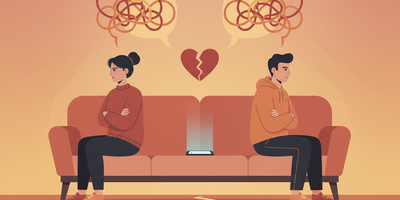
Nos Vendieron una Mentirosa Historia de Hadas. Nadie Nos Enseñó las Habilidades.

Nos vendieron una mentira.
No sobre el amor, sino sobre cómo funciona.
Nos mostraron cuentos de hadas donde la química equivale a la compatibilidad, la pasión a la longevidad, y "cuando lo sabes, lo sabes" mágicamente lleva a dos humanos imperfectos a través de décadas de estrés, facturas, agotamiento y suegros.
Nadie menciona que las relaciones reales requieren habilidad.
No vibraciones.
No esperanza.
No solo amor.
Habilidad.
Si no estás en crisis, pero sabes que algo tiene que cambiar, empieza por aquí.
1. Deja de Esperar el "Momento Adecuado". Programa el Reinicio.
Aquí está el problema con "ya hablaremos de ello cuando surja".
Siempre surge en el peor momento posible.
Cuando estás cansado.
Hambriento.
Ya irritado.
A medio camino de la puerta.
Eso no es comunicación.
Eso es un latigazo emocional.
En su lugar, crea un reinicio semanal.
No una dramática "cumbre de relación".
No una autopsia emocional de tres horas.
Un reinicio.
Un momento constante en el que ambos se quitan las máscaras, abren sus corazones y se reconectan:
-
¿Qué se sintió bien esta semana?
-
¿Qué se sintió mal?
-
¿Qué necesitamos más?
-
¿Qué necesita ajustarse antes de que se agrave?
Cuando construyes un ritmo, la tensión no se acumula como correo sin abrir.
La constancia reduce la presión.
Y la presión es lo que convierte las cosas pequeñas en explosiones.
2. Crea un Contenedor para las Conversaciones Difíciles
La mayoría de las discusiones se descontrolan por una sencilla razón:
No hay estructura.
Una persona interrumpe.
La otra escala.
Ambos empiezan a defenderse en lugar de escuchar.
De repente, están discutiendo sobre el tono en lugar del problema real.
La estructura está subestimada.
Intenta esto en su lugar:
- Una persona habla sin interrupción.
- La otra refleja lo que escuchó.
- Luego, cambian.
- Terminen con un paso siguiente específico.
Eso es todo.
Suena casi demasiado simple.
Pero cuando hay un contenedor, el caos disminuye.
Y cuando el caos disminuye, la actitud defensiva le sigue.
Esto no se trata de ser robótico.
Se trata de no dejar que la emoción se apodere de la situación.

3. Deja de Intentar Ganar. Empieza a Buscar el Patrón.
"¿Quién tiene razón?" es la pregunta menos útil en una relación.
¿La mejor pregunta?
"¿Cuál es el patrón?"
¿Discuten por dinero cada vez que uno de ustedes se siente estresado en el trabajo?
¿Ambos se cierran cuando la intimidad se siente vulnerable?
¿Uno de ustedes persigue mientras el otro se retira?
Los patrones eliminan la culpa.
Cuando ves la dinámica claramente, deja de ser:
"Tú siempre..."
Y empieza a ser:
"Esto es en lo que caemos cuando estamos cansados."
Ese cambio por sí solo lo cambia todo.
Porque ya no son oponentes.
Son compañeros de equipo resolviendo un problema recurrente.
4. Obsesiónate con la Velocidad de Reparación, No con la Perfección
Las parejas sanas discuten.
Sí, en serio.
¿La diferencia?
Se reparan más rápido.
No dejan que el ego convierta el conflicto en una guerra fría de tres días.
No utilizan el silencio como arma.
No arrastran la misma tensión sin resolver hasta la próxima semana.
La reparación se ve así:
-
"Reaccioné de forma exagerada."
-
"Eso sonó más duro de lo que pretendía."
-
"Entiendo cómo te lo tomaste."
-
"Esto es lo que haré diferente."
No disculpas dramáticas.
No autoflagelación.
Ajuste.
El objetivo no es eliminar la fricción.
Es acortar la ventana de recuperación.
5. Construye Hábitos. No Solo Percepción.
Puedes leer todos los artículos sobre relaciones en Internet.
Puedes hacer capturas de pantalla de citas.
Puedes enviarse TikToks sobre estilos de apego.
Y aun así repetir la misma discusión el próximo jueves.
La percepción se siente productiva.
La práctica es lo que cambia el comportamiento.
Aquí es donde las herramientas estructuradas importan.
No terapia.
No un chatbot.
No consejos genéricos.
Un ritual repetible.
Un sistema.
Una cadencia.
Algo que construye la comunicación como un músculo, con el tiempo.
Porque aquí está la incómoda verdad:
El amor no enseña automáticamente la comunicación.
La química no enseña automáticamente la reparación de conflictos.
El instinto no enseña automáticamente la regulación emocional.
Las habilidades sí.
¿Y cuando dejas de esperar que el cuento de hadas funcione solo, castillo y todo, y empiezas a construir una estructura intencionalmente?
Ahí es cuando las cosas realmente cambian.
Únete a más de 20.000 usuarios del Método de Revisión de Relaciones.